Sassafras (Sassafras albidum)
Root beer, gumbo, and the unmistakable scent of the Southern woods.
What It Is
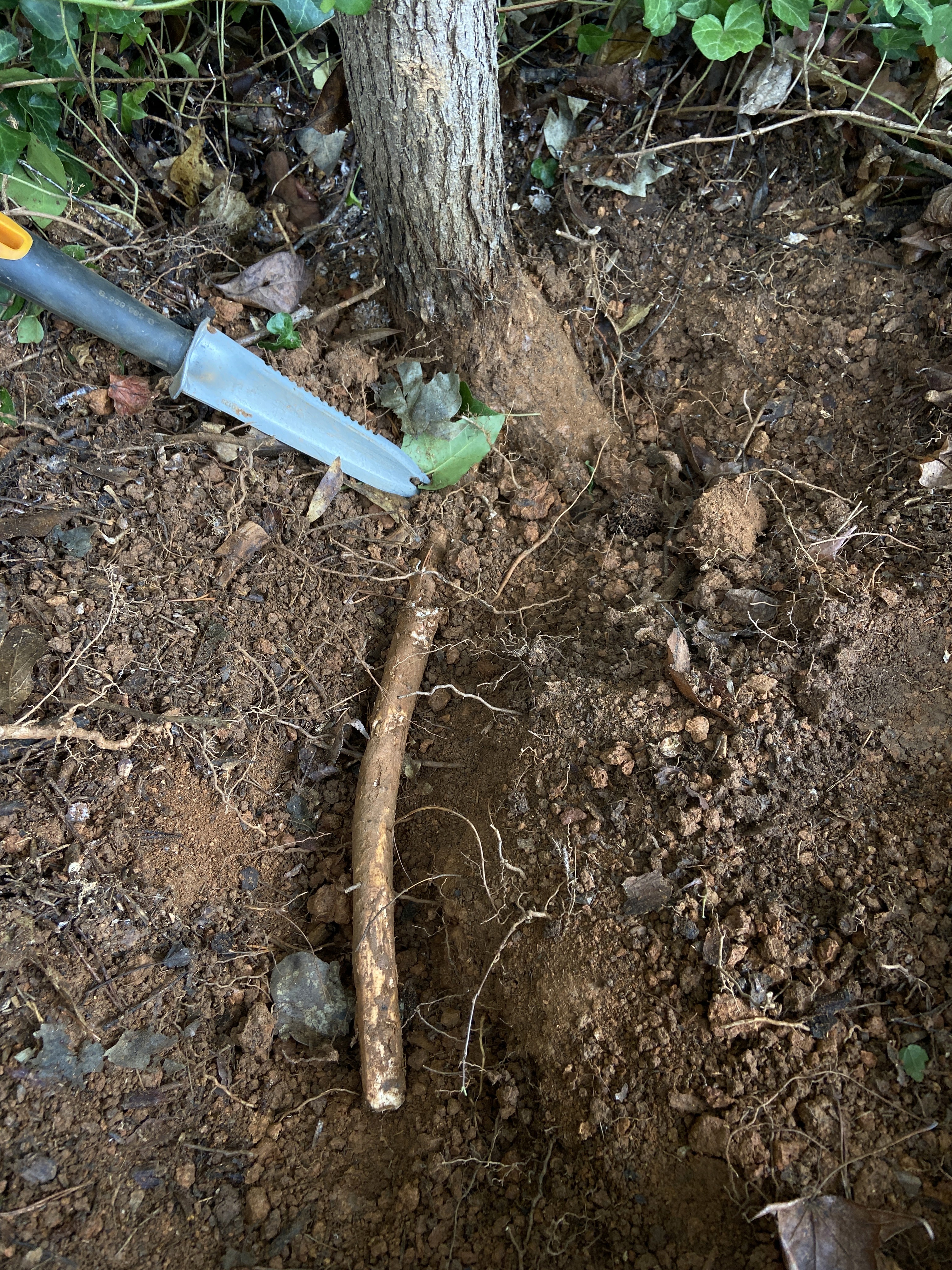
Sassafras is one of North America's most distinctive native trees, growing along woodland edges, old fields, roadsides, and forest openings throughout the eastern United States. Every part of the tree carries its signature spicy, citrus-like aroma, making it one of the easiest trees to identify once you've met it.
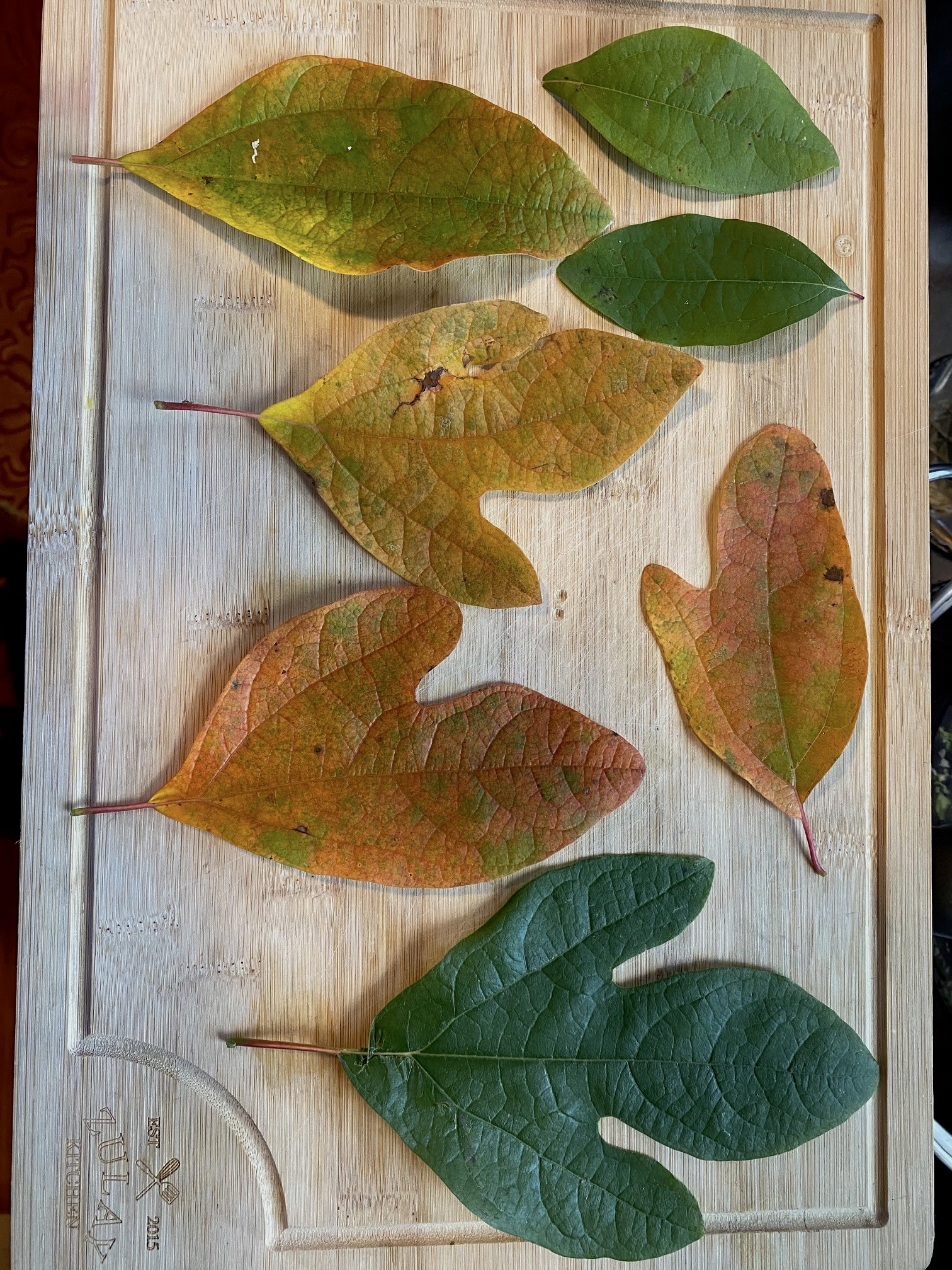
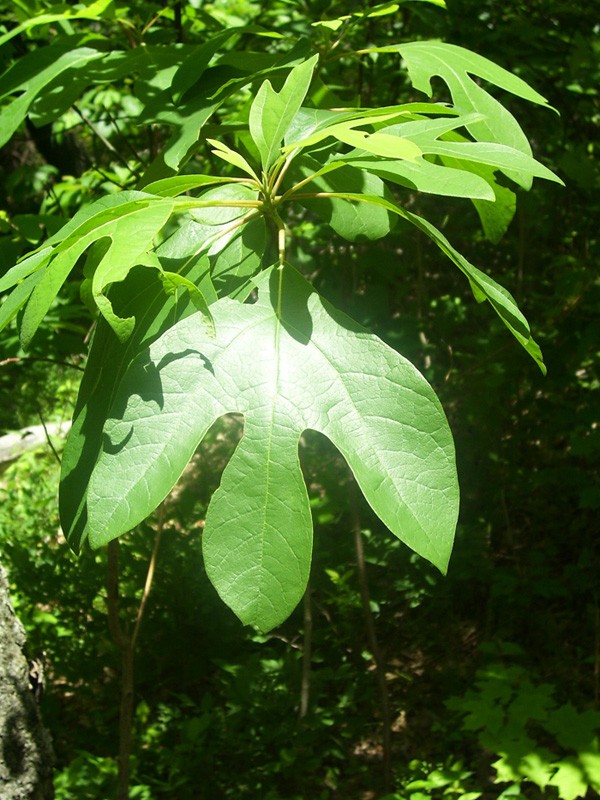
Perhaps its most charming feature is its leaves. A single tree may produce oval leaves, mitten-shaped leaves, and three-lobed "ghost" leaves all at once. In spring it offers tender leaves and flowers, summer brings fragrant foliage, and autumn rewards foragers with brilliant orange and scarlet color. For centuries, sassafras has flavored root beer, thickened gumbo, and earned a place in both kitchens and folklore.
Field ID Quick Tip
Sassafras is one of the easiest trees to recognize once you know its unusual leaves and fragrance.
Small to medium-sized deciduous tree.
Leaves may be unlobed, mitten-shaped, or three-lobed on the same branch.
Crushed leaves and twigs smell sweet, spicy, and citrusy.
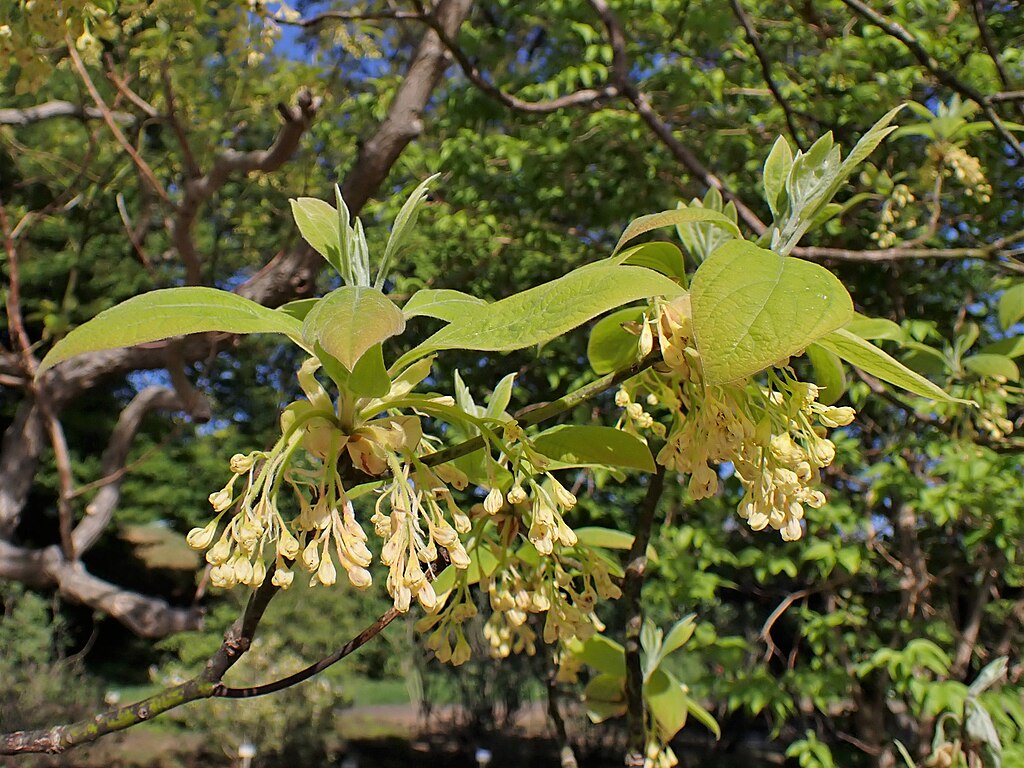
Bright yellow flowers appear in spring before or as leaves emerge.
Dark blue berries sit on bright red stalks in late summer.
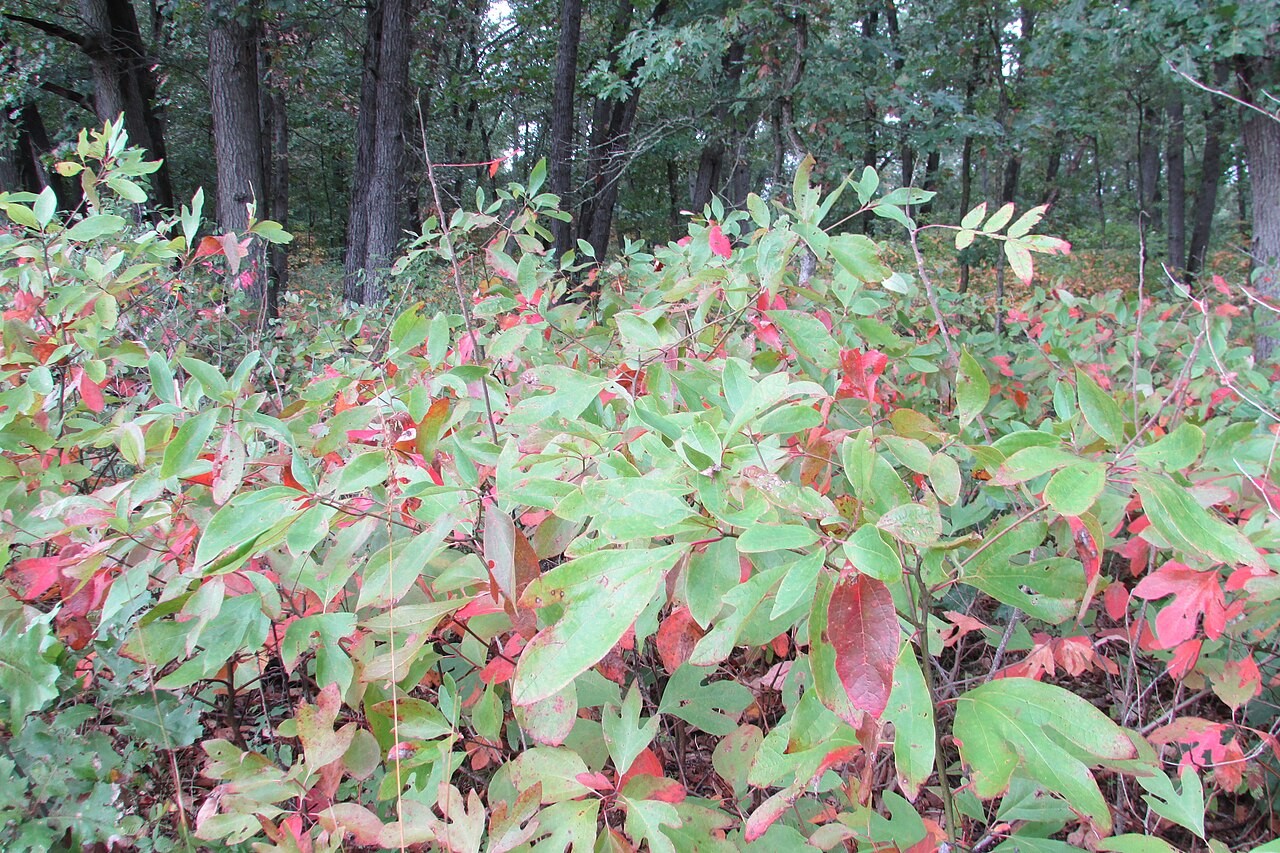
Brilliant orange, yellow, and red fall color.
Look-Alikes
Mulberry (Morus spp.)
Leaves can also be lobed.
Milky sap when leaf stems are broken.
Blackberry-like fruits instead of blue berries.
No spicy aroma.
Tulip Tree (Liriodendron tulipifera)
Four-lobed leaves with a squared-off tip.
Large tulip-shaped flowers.
Upright cone-like seed clusters.
No mitten-shaped leaves.
Sweetgum (Liquidambar styraciflua)
Star-shaped leaves with five pointed lobes.
Spiky ball-like fruits.
Aromatic, but not with sassafras's root beer scent.
Tip: Crush a leaf or snap a young twig. If it smells like root beer, citrus, or old-fashioned candy, you've probably found sassafras.
Root beer, gumbo, and the unmistakable scent of the Southern woods.
What It Is
Sassafras is one of North America's most distinctive native trees, growing along woodland edges, old fields, roadsides, and forest openings throughout the eastern United States. Every part of the tree carries its signature spicy, citrus-like aroma, making it one of the easiest trees to identify once you've met it.
Perhaps its most charming feature is its leaves. A single tree may produce oval leaves, mitten-shaped leaves, and three-lobed "ghost" leaves all at once. In spring it offers tender leaves and flowers, summer brings fragrant foliage, and autumn rewards foragers with brilliant orange and scarlet color. For centuries, sassafras has flavored root beer, thickened gumbo, and earned a place in both kitchens and folklore.
Field ID Quick Tip
Sassafras is one of the easiest trees to recognize once you know its unusual leaves and fragrance.
Small to medium-sized deciduous tree.
Leaves may be unlobed, mitten-shaped, or three-lobed on the same branch.
Crushed leaves and twigs smell sweet, spicy, and citrusy.
Bright yellow flowers appear in spring before or as leaves emerge.
Dark blue berries sit on bright red stalks in late summer.
Brilliant orange, yellow, and red fall color.
Look-Alikes
Mulberry (Morus spp.)
Leaves can also be lobed.
Milky sap when leaf stems are broken.
Blackberry-like fruits instead of blue berries.
No spicy aroma.
Tulip Tree (Liriodendron tulipifera)
Four-lobed leaves with a squared-off tip.
Large tulip-shaped flowers.
Upright cone-like seed clusters.
No mitten-shaped leaves.
Sweetgum (Liquidambar styraciflua)
Star-shaped leaves with five pointed lobes.
Spiky ball-like fruits.
Aromatic, but not with sassafras's root beer scent.
Tip: Crush a leaf or snap a young twig. If it smells like root beer, citrus, or old-fashioned candy, you've probably found sassafras.