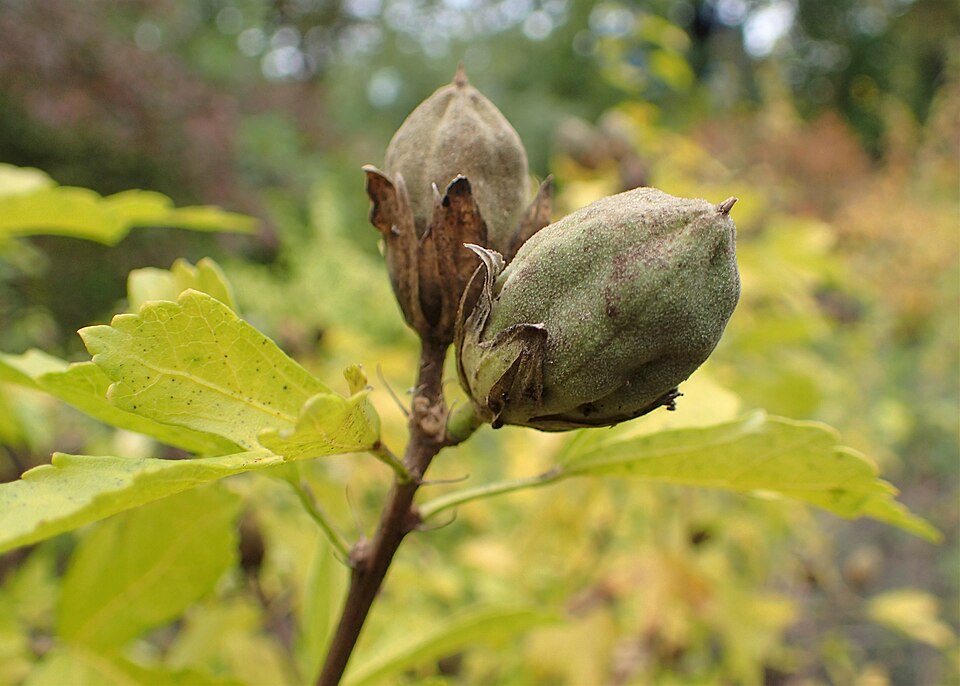
Rose of Sharon (Hibiscus syriacus)
A backyard favorite with flowers you can eat.
What It Is
Rose of Sharon is a hardy flowering shrub in the mallow family, producing large hibiscus-like blooms from midsummer into fall when many other plants have finished flowering. Native to eastern Asia but widely naturalized across North America, it's a familiar sight in neighborhoods, old farmsteads, and cottage gardens.
Its flowers attract bees, butterflies, hummingbirds, and curious foragers alike. Best of all, several parts of the plant are edible, making this beautiful ornamental a surprisingly useful addition to the wild pantry.
Field ID Quick Tip
Rose of Sharon is easy to recognize once it's in bloom.
Look for:
A multi-stemmed shrub or small tree.
Large hibiscus-like flowers in white, pink, lavender, blue, or purple.
Five overlapping petals surrounding a prominent central staminal column.
Distinctive three-lobed seed capsules that develop after flowering.
Leaves with coarse teeth and variable three-lobed shapes.
Tip: If it looks like a tropical hibiscus growing outside through a Midwestern winter, it's probably Rose of Sharon.
A backyard favorite with flowers you can eat.
What It Is
Rose of Sharon is a hardy flowering shrub in the mallow family, producing large hibiscus-like blooms from midsummer into fall when many other plants have finished flowering. Native to eastern Asia but widely naturalized across North America, it's a familiar sight in neighborhoods, old farmsteads, and cottage gardens.
Its flowers attract bees, butterflies, hummingbirds, and curious foragers alike. Best of all, several parts of the plant are edible, making this beautiful ornamental a surprisingly useful addition to the wild pantry.
Field ID Quick Tip
Rose of Sharon is easy to recognize once it's in bloom.
Look for:
A multi-stemmed shrub or small tree.
Large hibiscus-like flowers in white, pink, lavender, blue, or purple.
Five overlapping petals surrounding a prominent central staminal column.
Distinctive three-lobed seed capsules that develop after flowering.
Leaves with coarse teeth and variable three-lobed shapes.
Tip: If it looks like a tropical hibiscus growing outside through a Midwestern winter, it's probably Rose of Sharon.