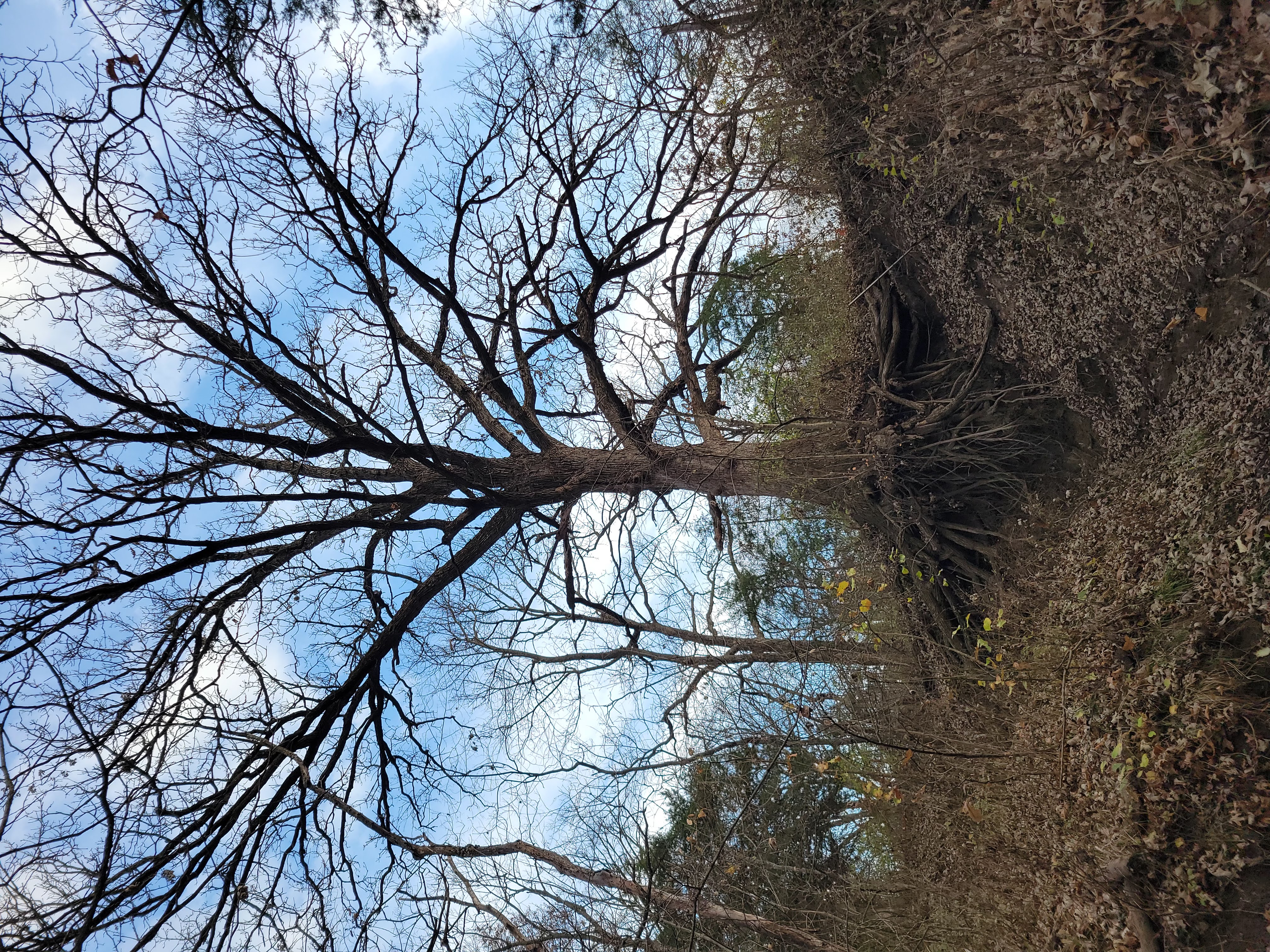
Ancient strength. Acorns and stories beneath every canopy.
What It Is
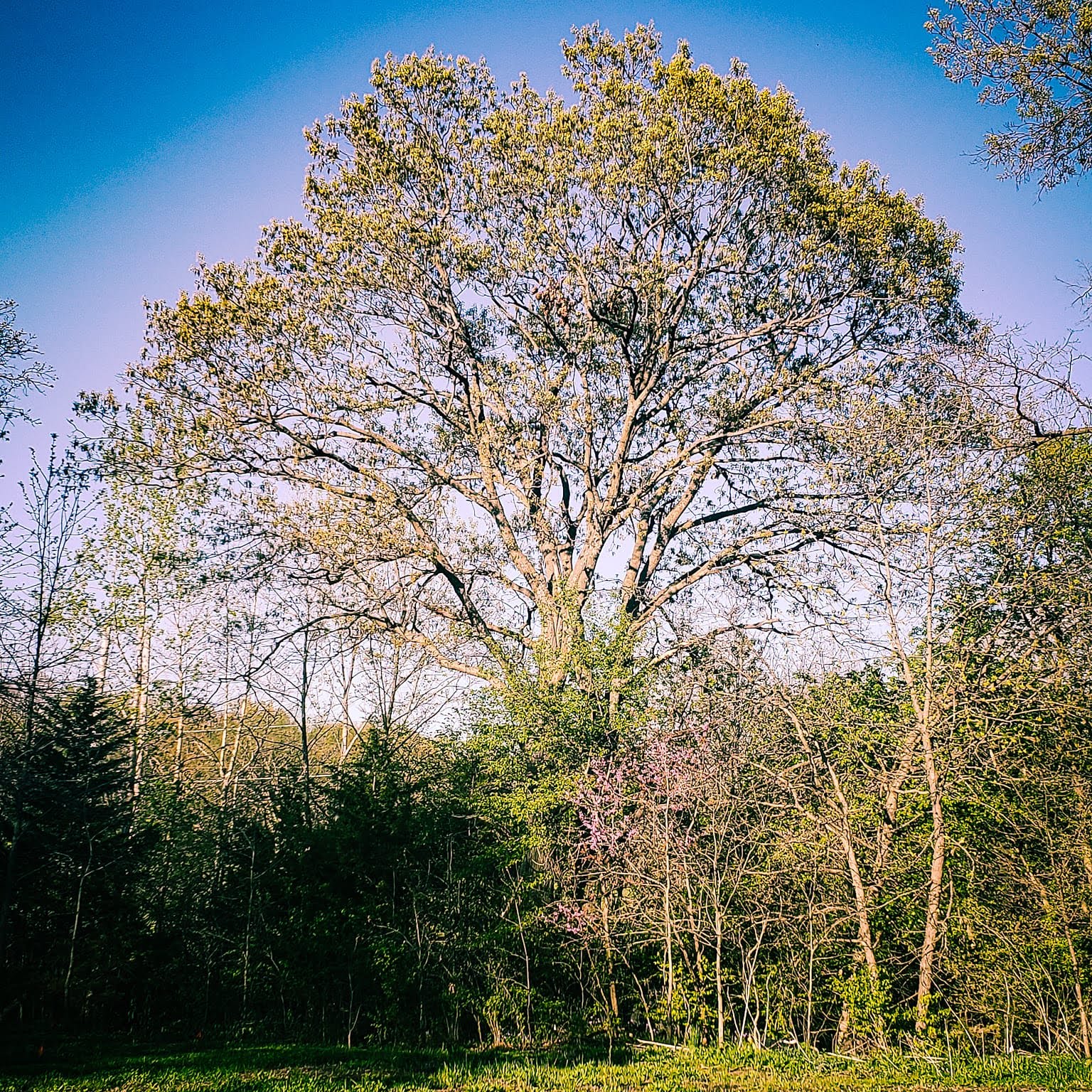
Oaks are among the most iconic trees in North America, shaping forests, feeding wildlife, and supporting more species than almost any other native tree. From towering white oaks to rugged black oaks, members of the genus Quercus can be found in nearly every region of the continent, where they provide food, shelter, and habitat for hundreds of insects, birds, and mammals.
Their sturdy trunks, lobed leaves, and familiar acorns make them easy to recognize, but there's far more to an oak than its appearance. For thousands of years, people have relied on acorns as an important staple food, used the bark for tanning and traditional crafts, and built homes, ships, barrels, and tools from its remarkably durable wood.
Learning to distinguish between the two major groups, white oaks and red oaks, opens the door to understanding both the forest and one of humanity's oldest food traditions.
Field ID Quick Tip
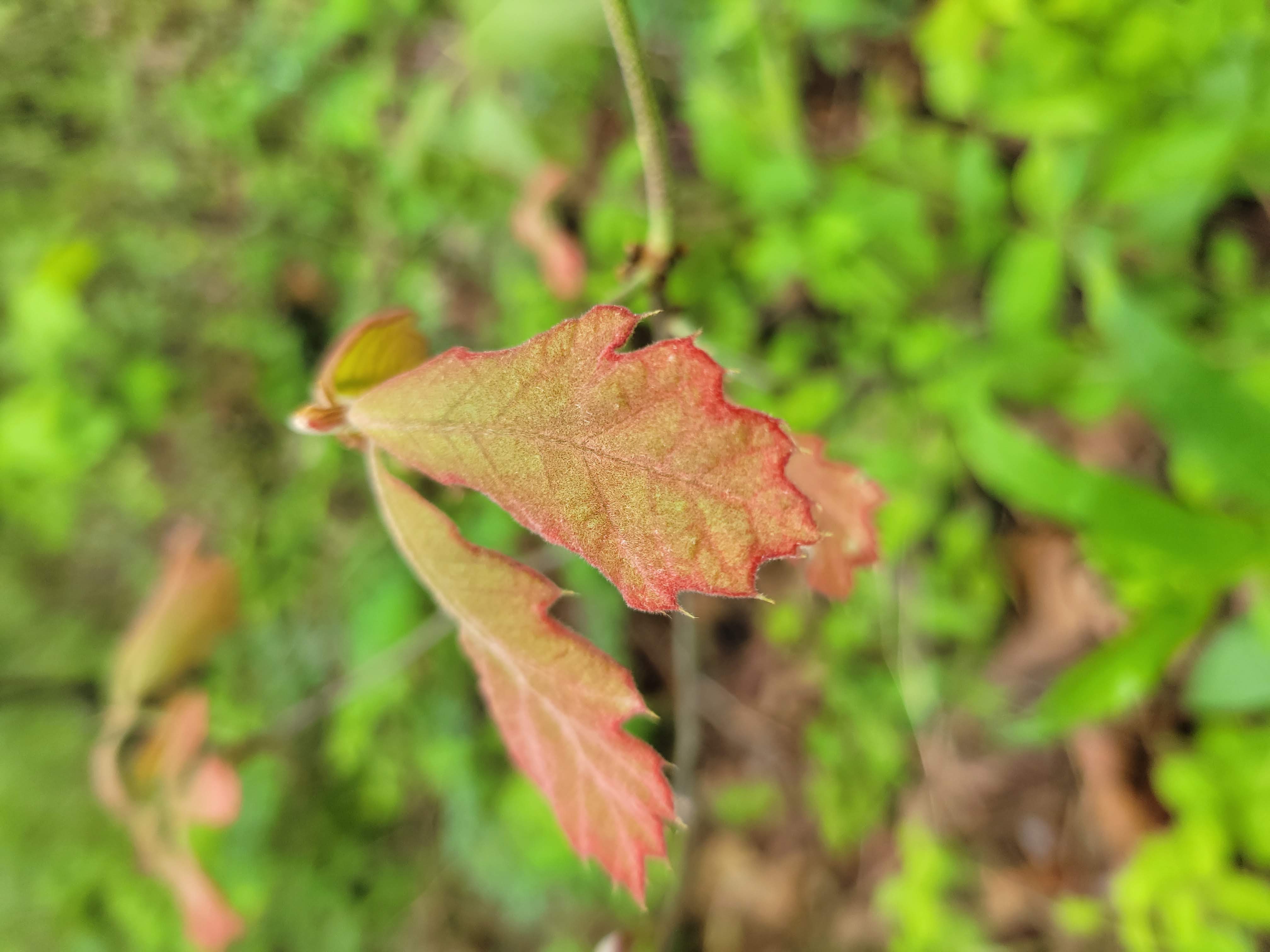
North American oaks fall into two major groups. Learning the difference will help you identify most species and predict how their acorns will taste.
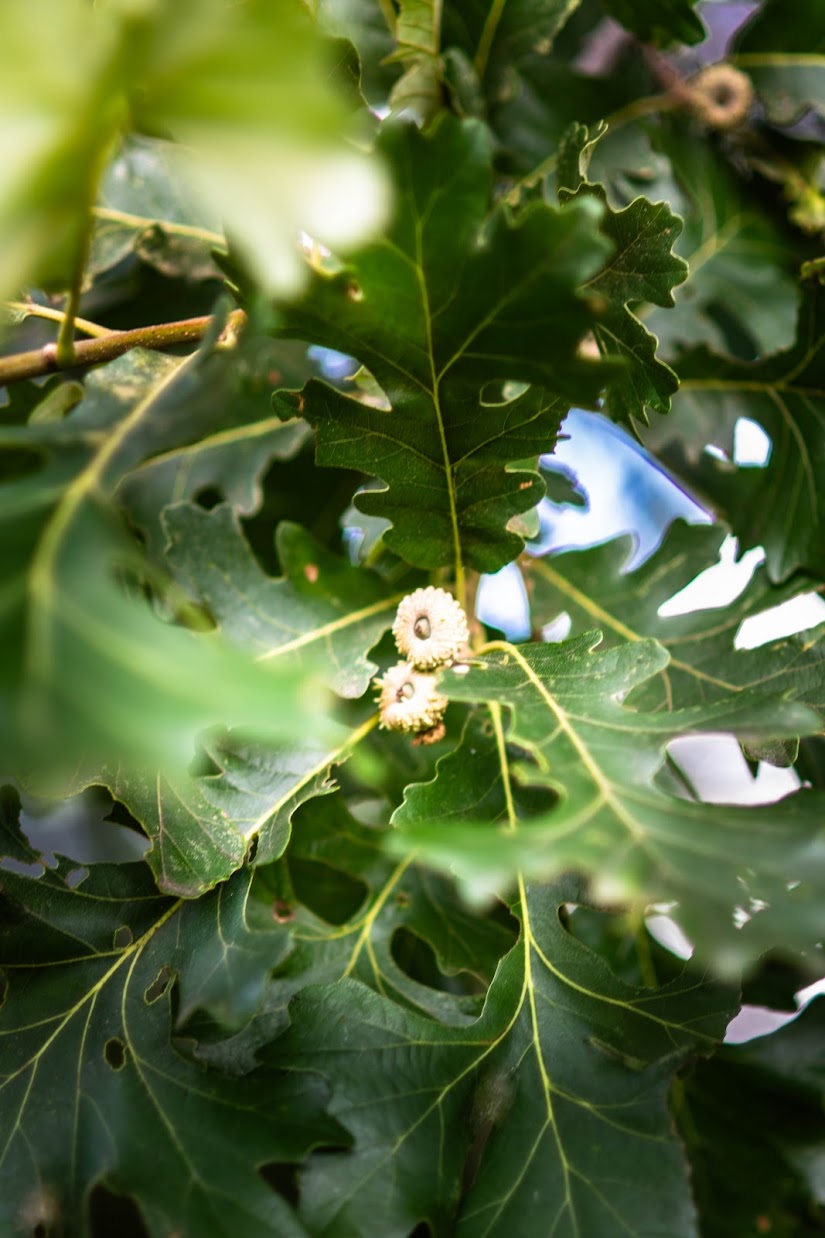
White Oak Group
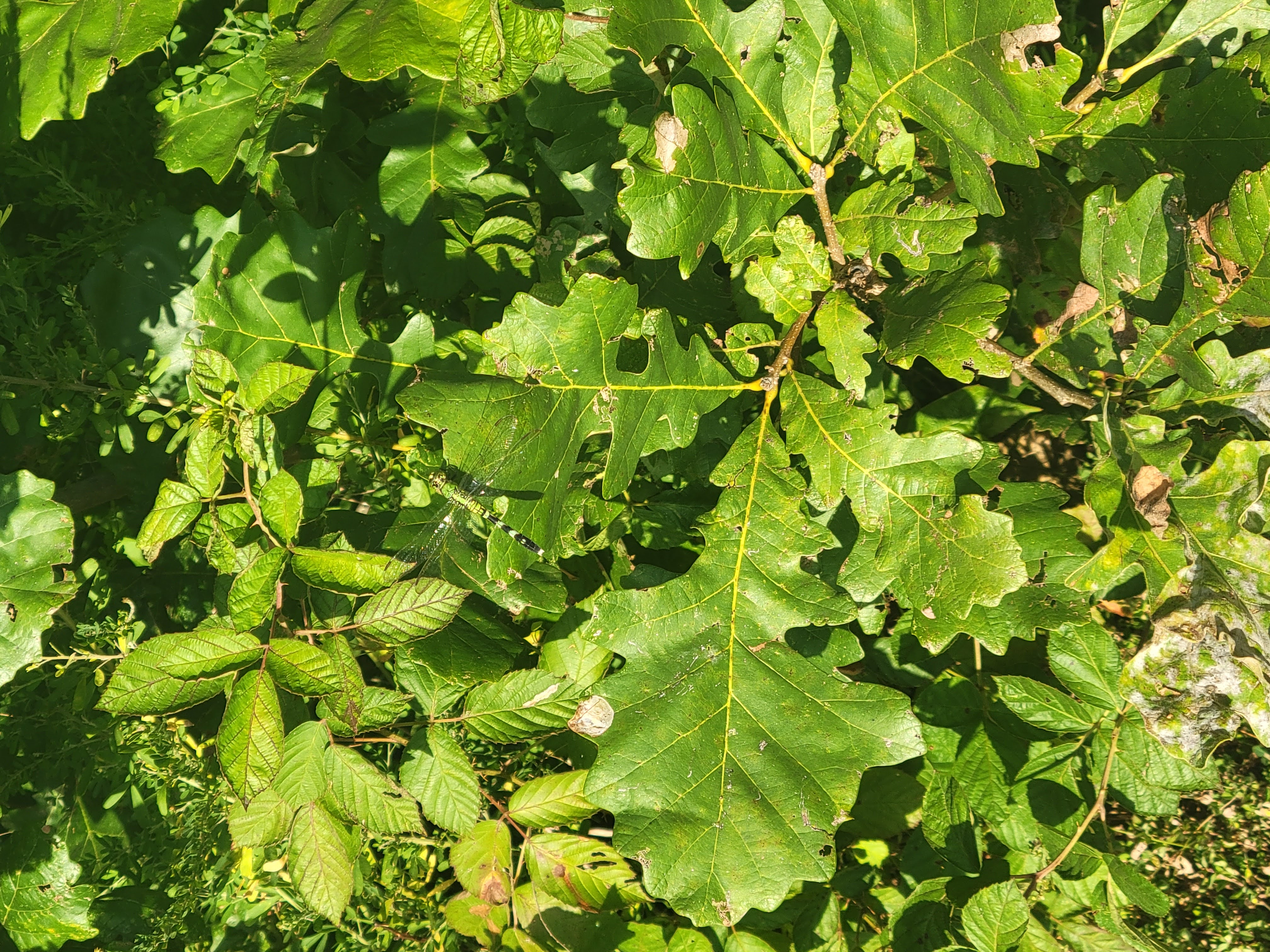
Rounded leaf lobes with no bristle tips.
Acorns mature in one growing season.
Sweeter, lower-tannin acorns that require less leaching.
Acorn caps often have warty or knobby scales.
Bark is typically light gray with broad, flaky plates.
Red Oak Group
Pointed leaf lobes tipped with tiny bristles.
Acorns mature over two growing seasons.
More bitter acorns that require longer leaching.
Acorn caps are often smoother and shallower.
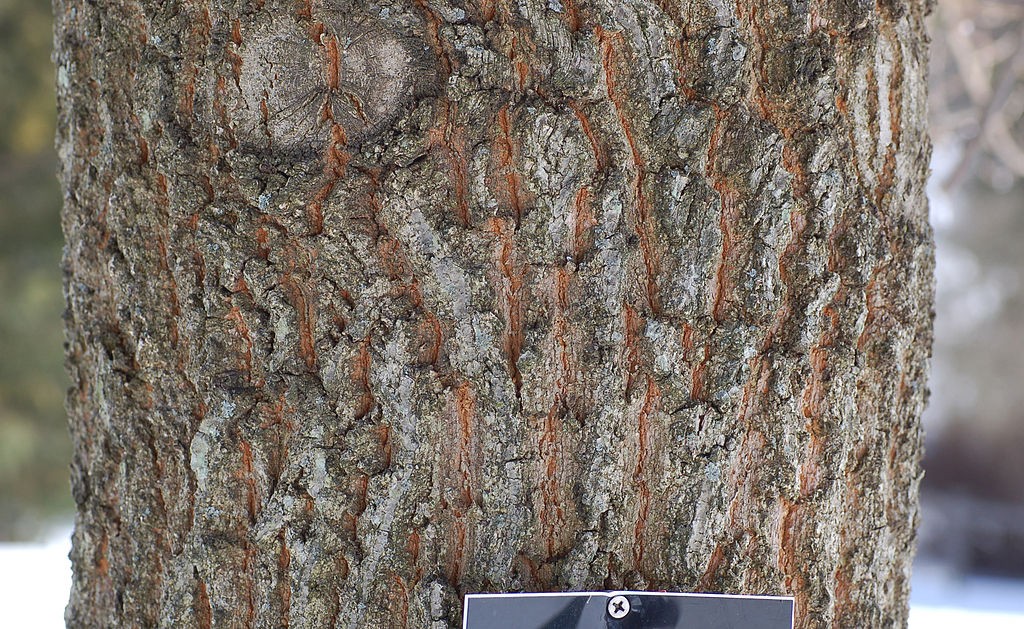
Bark is darker with long vertical ridges, sometimes called "ski tracks."
Look-Alikes
Chestnut (Castanea spp.)
Long, narrow leaves with sharp teeth instead of lobes.
Spiny burs rather than acorns.
No lobed leaves.
Beech (Fagus spp.)
Smooth gray bark.
Oval leaves with straight, parallel veins.
Small triangular nuts enclosed in prickly husks.
Tip:When in doubt, look at the leaves first. Rounded lobes mean white oak. Pointed, bristle-tipped lobes mean red oak.
Ancient strength. Acorns and stories beneath every canopy.
What It Is
Oaks are among the most iconic trees in North America, shaping forests, feeding wildlife, and supporting more species than almost any other native tree. From towering white oaks to rugged black oaks, members of the genus Quercus can be found in nearly every region of the continent, where they provide food, shelter, and habitat for hundreds of insects, birds, and mammals.
Their sturdy trunks, lobed leaves, and familiar acorns make them easy to recognize, but there's far more to an oak than its appearance. For thousands of years, people have relied on acorns as an important staple food, used the bark for tanning and traditional crafts, and built homes, ships, barrels, and tools from its remarkably durable wood.
Learning to distinguish between the two major groups, white oaks and red oaks, opens the door to understanding both the forest and one of humanity's oldest food traditions.
Field ID Quick Tip
North American oaks fall into two major groups. Learning the difference will help you identify most species and predict how their acorns will taste.
White Oak Group
Rounded leaf lobes with no bristle tips.
Acorns mature in one growing season.
Sweeter, lower-tannin acorns that require less leaching.
Acorn caps often have warty or knobby scales.
Bark is typically light gray with broad, flaky plates.
Red Oak Group
Pointed leaf lobes tipped with tiny bristles.
Acorns mature over two growing seasons.
More bitter acorns that require longer leaching.
Acorn caps are often smoother and shallower.
Bark is darker with long vertical ridges, sometimes called "ski tracks."
Look-Alikes
Chestnut (Castanea spp.)
Long, narrow leaves with sharp teeth instead of lobes.
Spiny burs rather than acorns.
No lobed leaves.
Beech (Fagus spp.)
Smooth gray bark.
Oval leaves with straight, parallel veins.
Small triangular nuts enclosed in prickly husks.
Tip:When in doubt, look at the leaves first. Rounded lobes mean white oak. Pointed, bristle-tipped lobes mean red oak.
Use It Like This
Acorns
Leach tannins before eating.
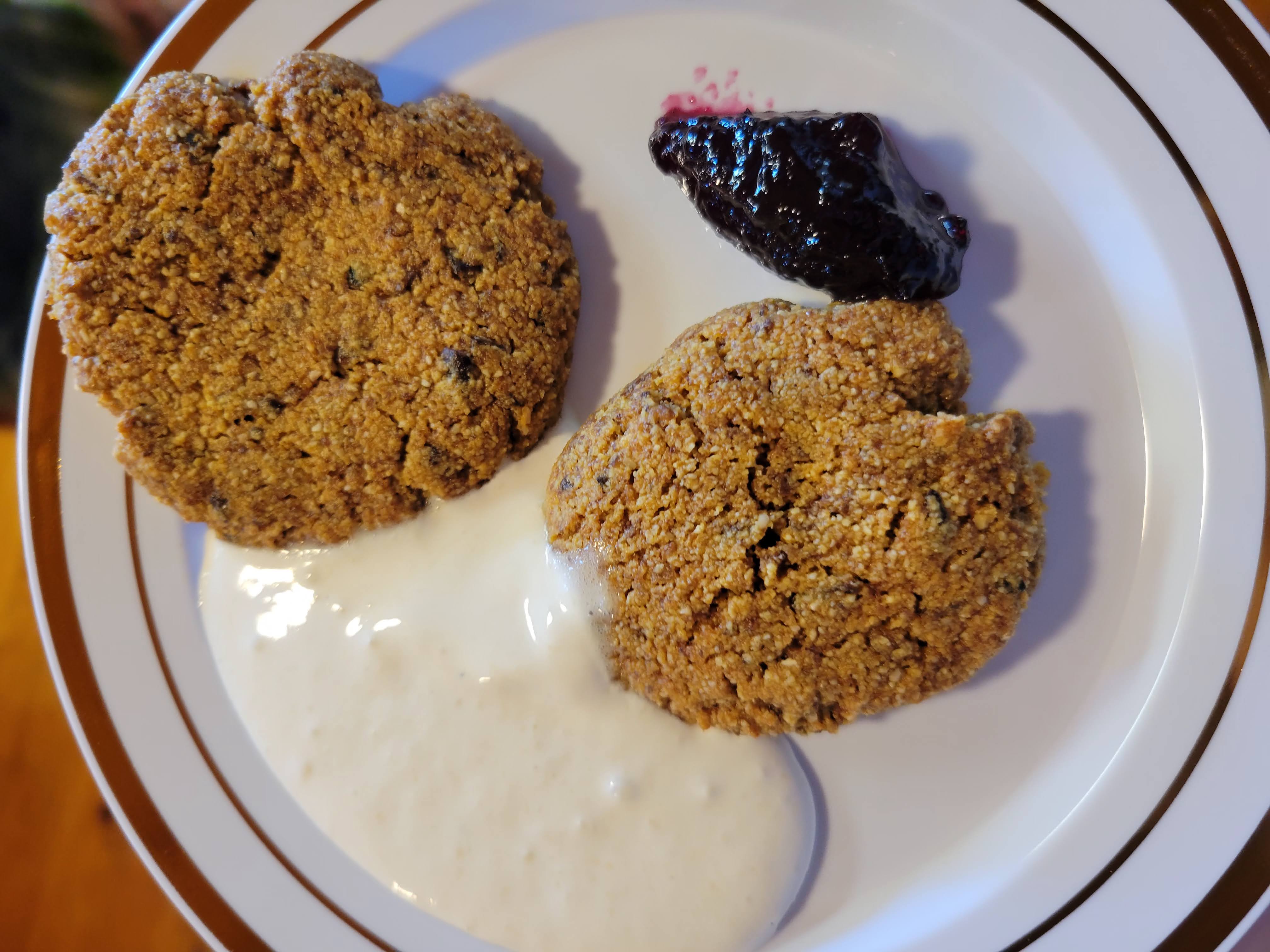
Grind into flour for breads, pancakes, crackers, or pasta.
Roast for a nutty snack.
Add to soups, stews, and grain dishes.
Use as a natural thickener for hearty recipes.
Oak Galls
Make traditional iron gall ink.
Use in natural dye and historical craft projects.
A fascinating example of insect and tree relationships.
Leaves & Bark
Use leaves for nature crafts, seasonal decorations, and plant identification.
Bark has been traditionally used in leather tanning because of its high tannin content.
Historically incorporated into natural dyeing and other traditional crafts.
Wood
Smoke meats and vegetables.
Burn as one of North America's premier firewoods.
Build furniture, flooring, barrels, tool handles, and woodworking projects.
Tip:White oak acorns are usually the best choice for beginners. Their naturally lower tannin levels mean less leaching and a milder, sweeter flavor.
Harvest Notes
Gather acorns as soon as they begin falling in autumn for the freshest harvest.
Choose acorns that are heavy, smooth, and free from cracks or mold.
Float acorns in water before processing. Discard those that float, as they're often damaged by insects or poorly developed.
Remove the shells before leaching to speed the process.
Dry acorn flour thoroughly before long-term storage to prevent spoilage.
Leave plenty of acorns behind for wildlife. Deer, squirrels, wild turkeys, blue jays, woodpeckers, and countless other species depend on them.
Seasonal Tip:Don't throw away every acorn with a tiny hole. If you discover an acorn weevil inside, know that it's harmless and even edible. Most foragers simply remove the larva and continue processing the acorn.
Did You Know?
A single mature oak can produce thousands of acorns during a "mast year," flooding the forest with food. Scientists believe these boom-and-bust crops help overwhelm seed predators. Even after squirrels, deer, birds, insects, and other wildlife eat their fill, enough acorns remain to sprout into the next generation of oaks.
Ancient Roots
Oaks have shaped forests across the Northern Hemisphere for tens of millions of years. Long before agriculture, people gathered acorns as a dependable staple food, developing ingenious methods to remove their bitter tannins and transform them into nourishing flour, breads, and porridges.
Across North America, Europe, and Asia, oak became a symbol of strength and endurance. Indigenous peoples throughout North America relied on regional oak species for food, while the wood built homes, tools, canoes, barrels, and communities. Today, oaks remain ecological giants, supporting more wildlife than almost any other native tree.
Wild Pantry Snapshot
Few trees have given more to people and wildlife than the mighty oak. Its acorns have nourished generations, its wood has built civilizations, and its branches shelter entire ecosystems. Learn the difference between white and red oaks, and you'll begin to see one of North America's greatest pantry trees in an entirely new way.