Plant ID Pages
Plant ID Pages
Plant ID Pages
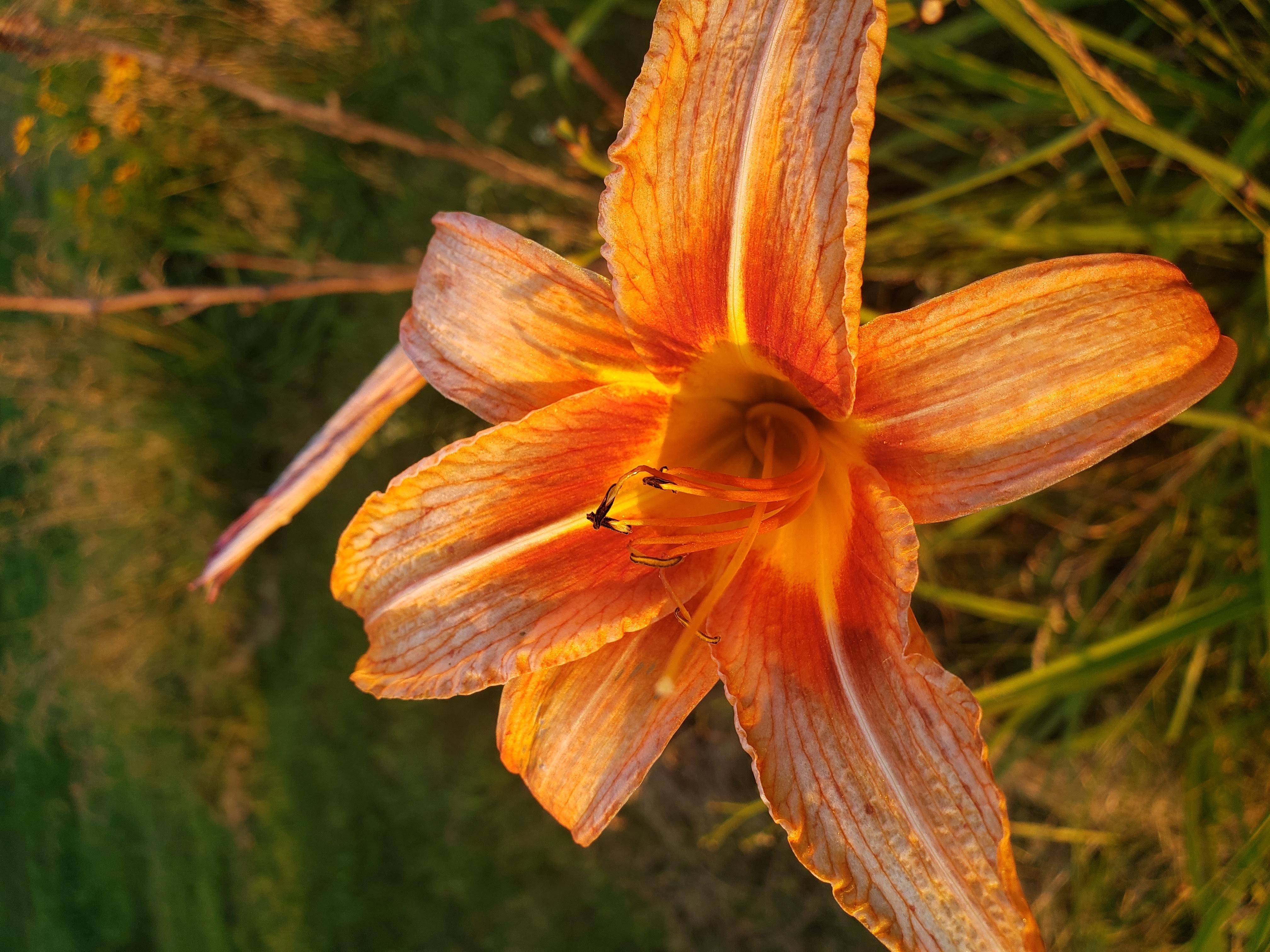
Daylily (Hemerocallis fulva)
Daylily (Hemerocallis fulva)
Crunchy, colorful, and criminally underused.
What It Is
Daylilies aren't true lilies, and that's good news. These hardy perennials belong to a completely different plant family and have been cultivated for food and beauty for centuries. Widely planted around homes, roadsides, cemeteries, and old farmsteads, they often persist long after the original buildings have disappeared.
Nearly every stage of the plant offers something for the table. Tender spring shoots, unopened flower buds, fresh blossoms, and young tubers have all earned a place in kitchens around the world.
Field ID Quick Tip
Daylilies are easy to recognize once you know what to look for.
Long, arching, strap-like leaves growing in clumps from the base.
Leafless flower stalks that rise above the foliage.
Large trumpet-shaped flowers with six tepals.
Each flower blooms for just one day before fading.
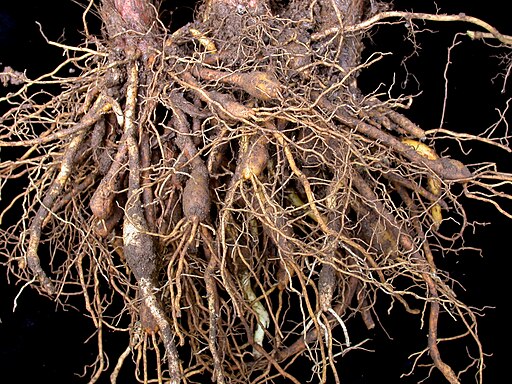
Thick, fleshy roots with small potato-like tubers.
Tip: Daylilies grow in dense clumps. True lilies (Lilium spp.) grow from a single upright stem with leaves attached along its length.
Crunchy, colorful, and criminally underused.
What It Is
Daylilies aren't true lilies, and that's good news. These hardy perennials belong to a completely different plant family and have been cultivated for food and beauty for centuries. Widely planted around homes, roadsides, cemeteries, and old farmsteads, they often persist long after the original buildings have disappeared.
Nearly every stage of the plant offers something for the table. Tender spring shoots, unopened flower buds, fresh blossoms, and young tubers have all earned a place in kitchens around the world.
Field ID Quick Tip
Daylilies are easy to recognize once you know what to look for.
Long, arching, strap-like leaves growing in clumps from the base.
Leafless flower stalks that rise above the foliage.
Large trumpet-shaped flowers with six tepals.
Each flower blooms for just one day before fading.
Thick, fleshy roots with small potato-like tubers.
Tip: Daylilies grow in dense clumps. True lilies (Lilium spp.) grow from a single upright stem with leaves attached along its length.
Use It Like This
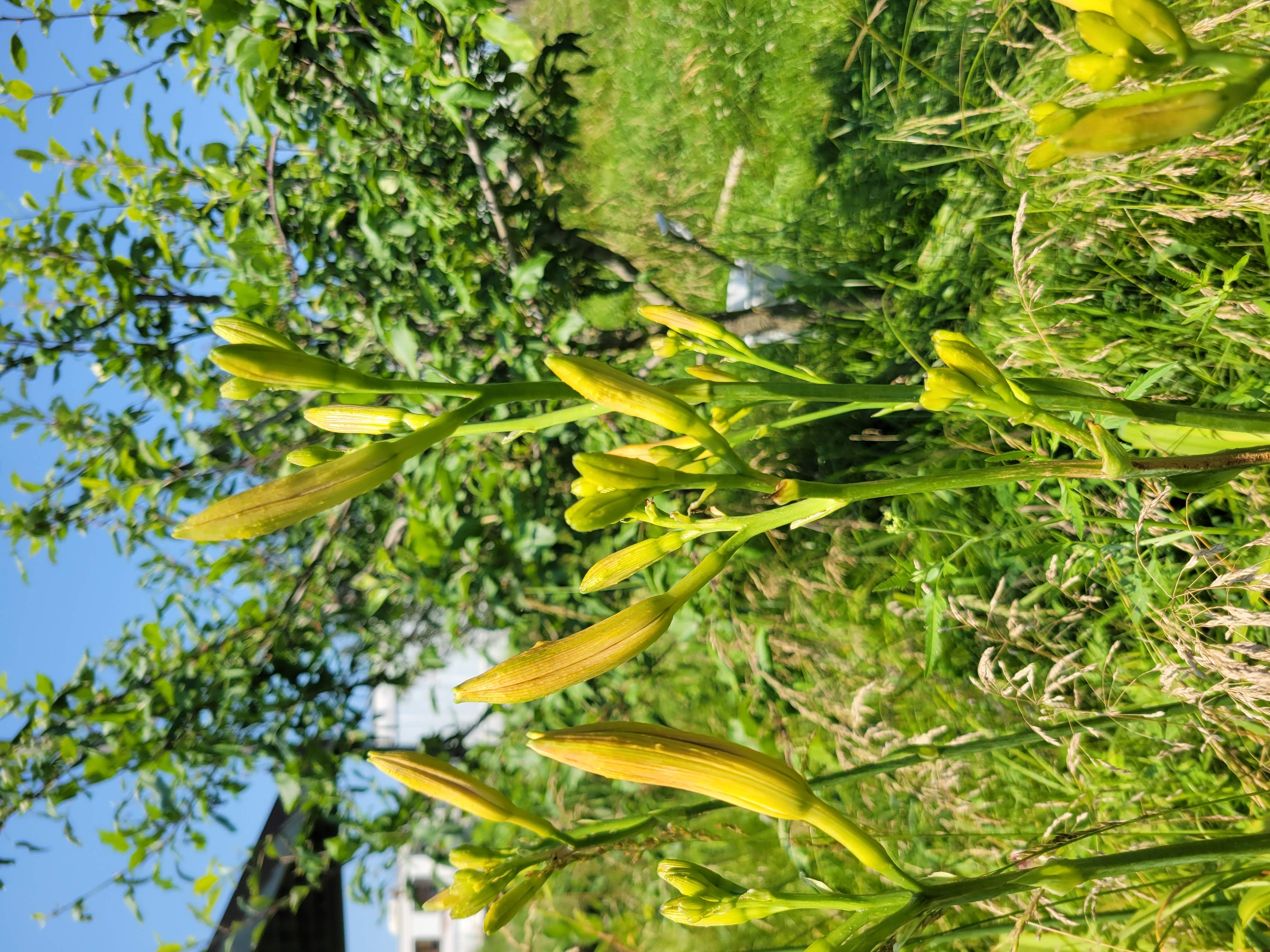
Flower Buds
Sauté in butter or olive oil like green beans.
Stir-fry with garlic and ginger.
Add to soups and noodle dishes.
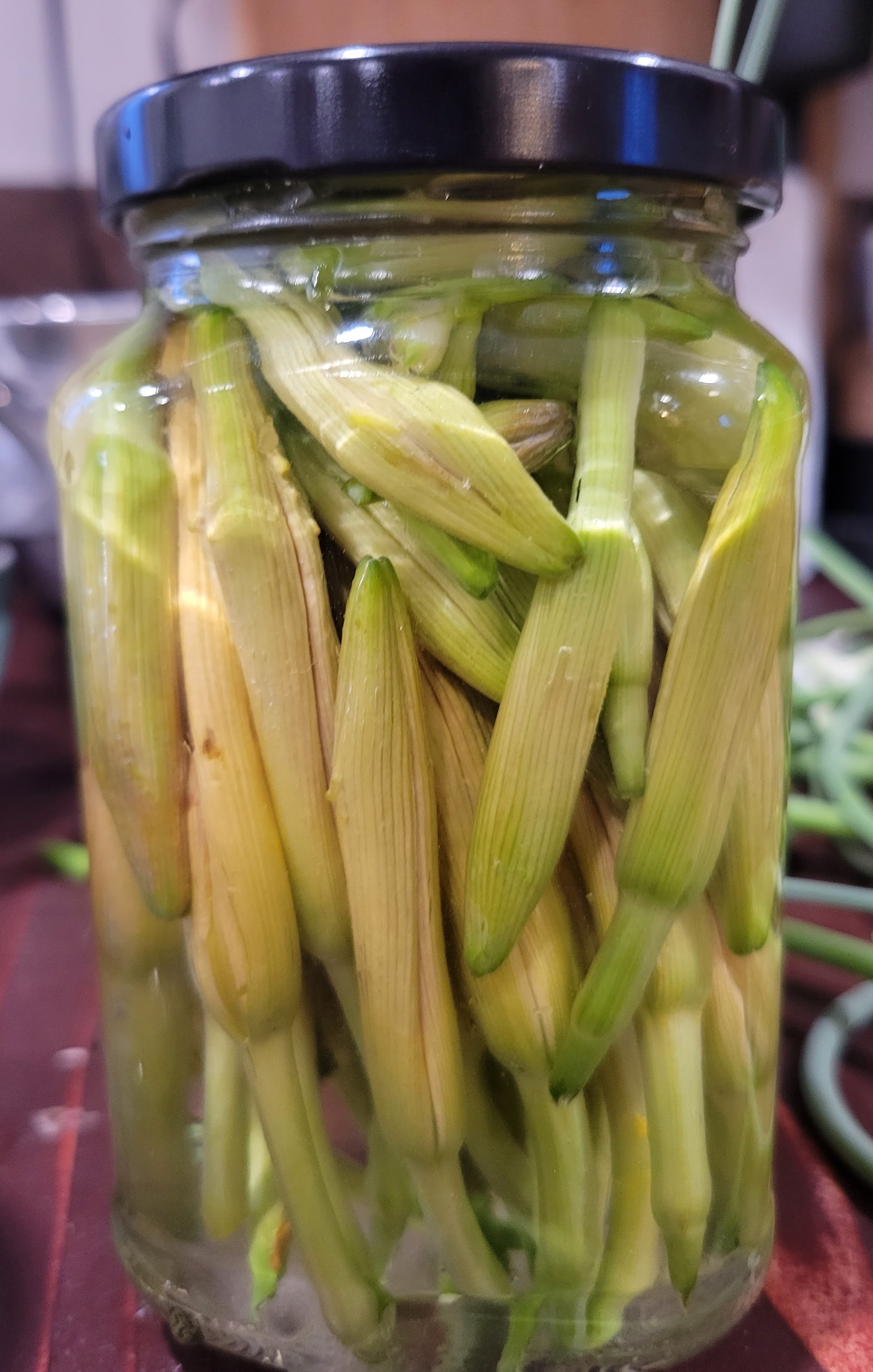
Pickle for a tangy seasonal treat.
Fresh Blossoms
Stuff with goat cheese, hummus, or herbed cream cheese.
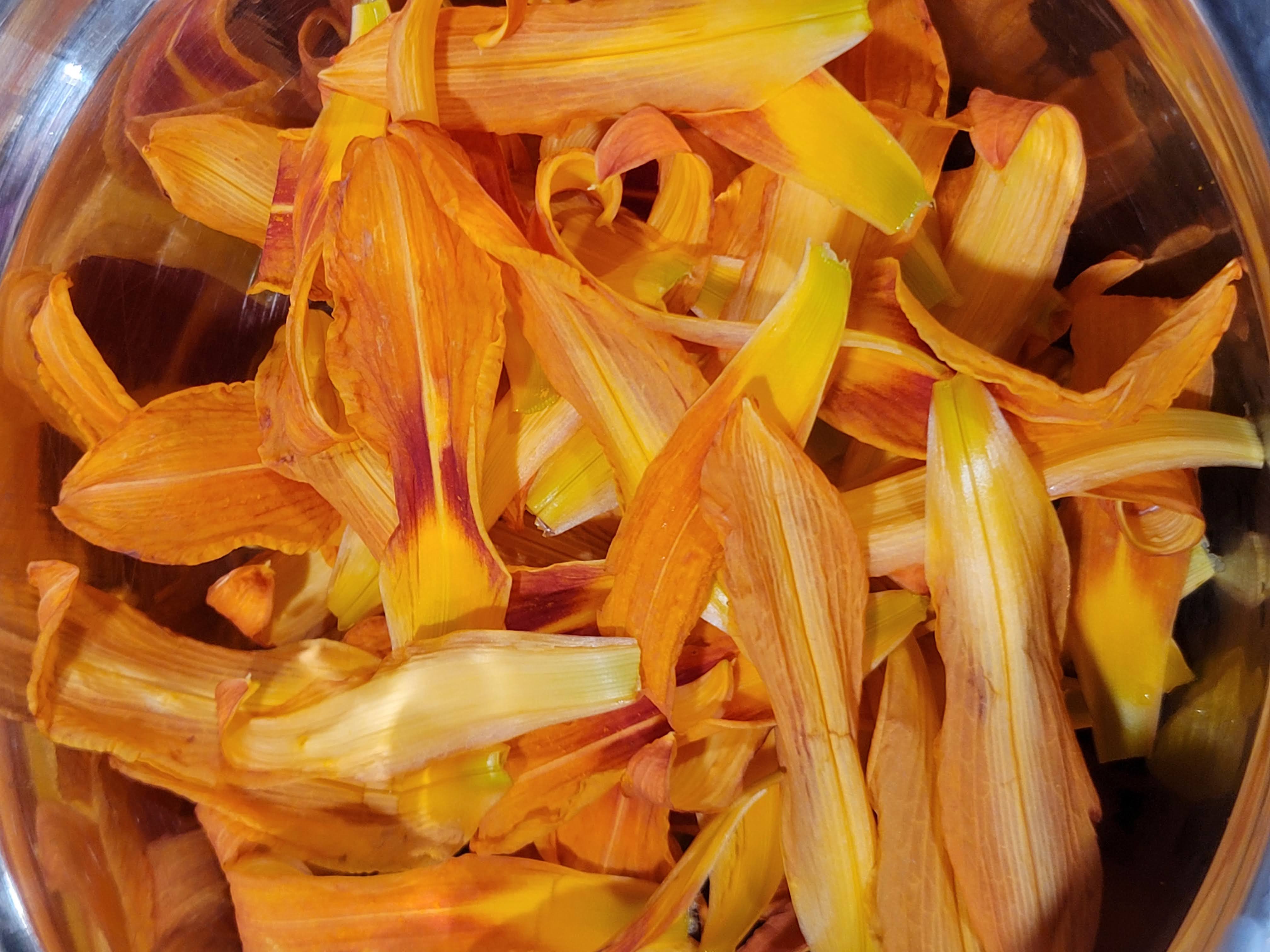
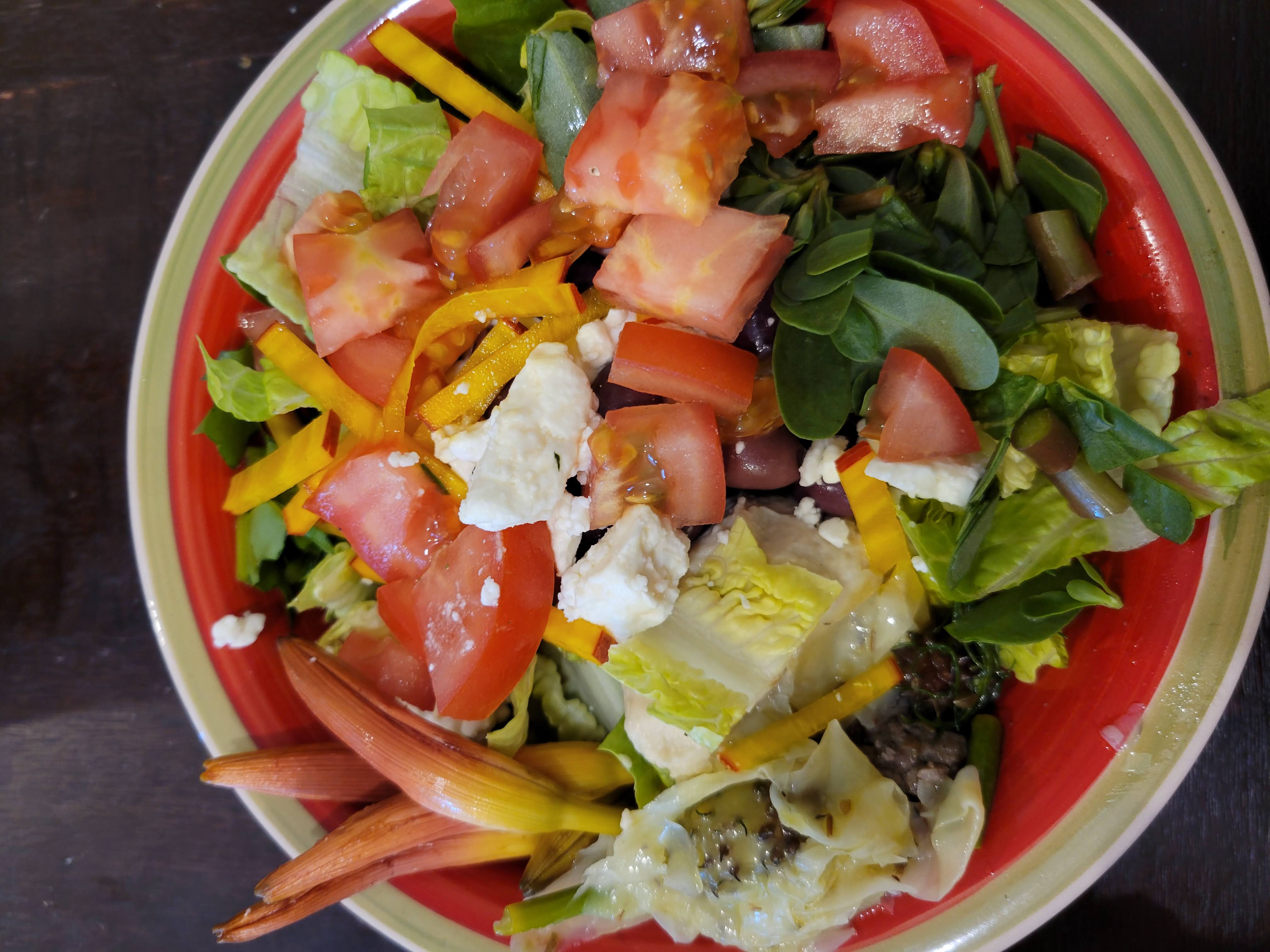
Toss petals into salads for color and crunch.
Garnish desserts and summer drinks.
Dip whole flowers in a light batter and fry as fritters.
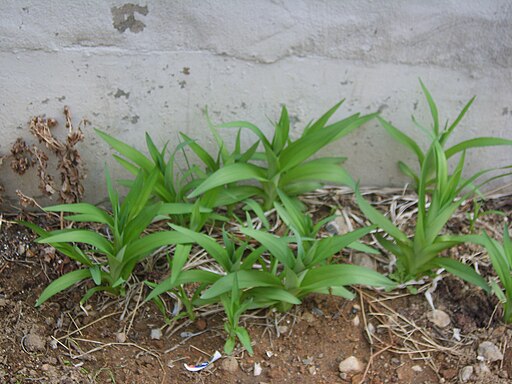
Young Shoots
Harvest while tender in early spring.
Sauté with other spring vegetables.
Add to stir-fries or soups.
Steam as a simple side dish.
Tubers
Roast until tender like baby potatoes.
Boil and mash.
Add to stews.
Enjoy their mildly sweet, earthy flavor.
Tip: Start with small portions the first time you eat daylilies. While many people enjoy them without issue, some experience digestive upset. Cooking the shoots and tubers improves both flavor and digestibility.
Use It Like This
Flower Buds
Sauté in butter or olive oil like green beans.
Stir-fry with garlic and ginger.
Add to soups and noodle dishes.
Pickle for a tangy seasonal treat.
Fresh Blossoms
Stuff with goat cheese, hummus, or herbed cream cheese.
Toss petals into salads for color and crunch.
Garnish desserts and summer drinks.
Dip whole flowers in a light batter and fry as fritters.
Young Shoots
Harvest while tender in early spring.
Sauté with other spring vegetables.
Add to stir-fries or soups.
Steam as a simple side dish.
Tubers
Roast until tender like baby potatoes.
Boil and mash.
Add to stews.
Enjoy their mildly sweet, earthy flavor.
Tip: Start with small portions the first time you eat daylilies. While many people enjoy them without issue, some experience digestive upset. Cooking the shoots and tubers improves both flavor and digestibility.
Harvest Notes
Harvest young shoots in early spring before they become fibrous.
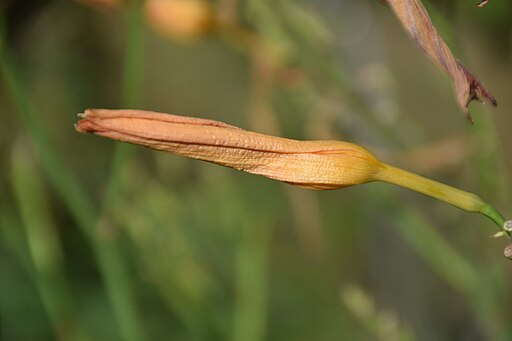
Pick unopened flower buds while they are plump and firm.
Gather blossoms early in the morning before they wilt.
Dig tubers from established clumps during the dormant season.
Avoid ornamental plantings treated with pesticides or systemic insecticides.
Never confuse daylilies with true lilies (Lilium spp.), which are different plants.
Did You Know?
Despite the name, each daylily flower lasts for only one day. Fortunately, a healthy plant produces dozens of buds over several weeks, providing a continual harvest throughout the blooming season.
Ancient Roots
Native to Asia, daylilies have been cultivated for well over a thousand years as both food and ornament. In China, the dried flower buds, often called golden needles, remain a traditional ingredient in soups, stir-fries, and hot-and-sour dishes. As settlers carried daylilies around the world, they escaped gardens and became familiar landmarks around abandoned homesteads, roadsides, and country churches across North America.
Wild Pantry Snapshot
Daylilies prove that some of the best wild foods are hiding in plain sight. From crisp spring shoots to colorful summer blossoms and hearty tubers, this cheerful garden escapee offers something delicious through much of the growing season. Once you learn to recognize it, you'll start seeing edible opportunities in every old farmhouse and country roadside.
Harvest Notes
Harvest young shoots in early spring before they become fibrous.
Pick unopened flower buds while they are plump and firm.
Gather blossoms early in the morning before they wilt.
Dig tubers from established clumps during the dormant season.
Avoid ornamental plantings treated with pesticides or systemic insecticides.
Never confuse daylilies with true lilies (Lilium spp.), which are different plants.
Did You Know?
Despite the name, each daylily flower lasts for only one day. Fortunately, a healthy plant produces dozens of buds over several weeks, providing a continual harvest throughout the blooming season.
Ancient Roots
Native to Asia, daylilies have been cultivated for well over a thousand years as both food and ornament. In China, the dried flower buds, often called golden needles, remain a traditional ingredient in soups, stir-fries, and hot-and-sour dishes. As settlers carried daylilies around the world, they escaped gardens and became familiar landmarks around abandoned homesteads, roadsides, and country churches across North America.
Wild Pantry Snapshot
Daylilies prove that some of the best wild foods are hiding in plain sight. From crisp spring shoots to colorful summer blossoms and hearty tubers, this cheerful garden escapee offers something delicious through much of the growing season. Once you learn to recognize it, you'll start seeing edible opportunities in every old farmhouse and country roadside.
Harvest Notes
Harvest young shoots in early spring before they become fibrous.
Pick unopened flower buds while they are plump and firm.
Gather blossoms early in the morning before they wilt.
Dig tubers from established clumps during the dormant season.
Avoid ornamental plantings treated with pesticides or systemic insecticides.
Never confuse daylilies with true lilies (Lilium spp.), which are different plants.
Did You Know?
Despite the name, each daylily flower lasts for only one day. Fortunately, a healthy plant produces dozens of buds over several weeks, providing a continual harvest throughout the blooming season.
Ancient Roots
Native to Asia, daylilies have been cultivated for well over a thousand years as both food and ornament. In China, the dried flower buds, often called golden needles, remain a traditional ingredient in soups, stir-fries, and hot-and-sour dishes. As settlers carried daylilies around the world, they escaped gardens and became familiar landmarks around abandoned homesteads, roadsides, and country churches across North America.
Wild Pantry Snapshot
Daylilies prove that some of the best wild foods are hiding in plain sight. From crisp spring shoots to colorful summer blossoms and hearty tubers, this cheerful garden escapee offers something delicious through much of the growing season. Once you learn to recognize it, you'll start seeing edible opportunities in every old farmhouse and country roadside.